Cygnet Theatre Announces Season 20
We can’t believe it but Season 20 will be our last full season in Old Town. Because of this we have designed a lineup that captures our past, present, and future in a celebratory way…with music!
2024 is going to be a landmark year for Cygnet Theatre and we and hope you’ll join us for it.
Favorite Holiday Musical
A CHRISTMAS CAROL
Adaptation & Lyrics by Sean Murray
Original Score by Billy Thompson
Directed by Sean Murray
Music Direction by Patrick Marion
Dec.1 – Dec. 30, 2023
Cygnet’s holiday smash hit is back for its eighth season! Enjoy the holiday classic adapted from Charles Dickens’ timeless tale of hope and redemption. This imaginative production features original music, creative stagecraft and puppetry, and live sound effects. Step into a Victorian Christmas card for a unique storytelling experience that is sure to delight the entire family!
Riveting One-Act Musical
LADY DAY AT EMERSON’S BAR & GRILL
By Lanie Robertson
Directed by Wren T. Brown
Featuring Karole Foreman
In Association with Ebony Repertory Theatre
Jan. 24 – Feb. 18, 2024
Lady Day at Emerson’s Bar & Grill recounts Billie Holiday’s life story through the songs that made her famous. 1959, in a small, intimate bar in Philadelphia, Holiday puts on a show that unbeknownst to the audience, will leave them witnesses to one of the last performances of her lifetime. Through her poignant voice and moving songs, one of the greatest jazz singers of all-time shares her loves and her losses.
An Electropop Opera
WEST COAST PREMIERE
NATASHA, PIERRE & THE GREAT COMET OF 1812
Book, Lyrics and Music by Dave Malloy
Adapted from War and Peace by Leo Tolstoy
Directed by Sean Murray
Music Direction by Patrick Marion
Choreography by Katie Banville
Apr. 10 – May 12, 2024
From the celebrated and award-winning composer Dave Malloy comes Natasha, Pierre & The Great Comet of 1812, an electropop opera based on a scandalous slice of Leo Tolstoy’s War and Peace. Young and impulsive, Natasha Rostova arrives in Moscow to await the return of her fiancé from the front lines. When she falls under the spell of the roguish Anatole, it is up to Pierre, a family friend in the middle of an existential crisis, to pick up the pieces of her shattered reputation. This award-winning musical expands the possibilities for the genre with its daring score and bold storytelling.
Intimate and Inspiring Musical
tick, tick… BOOM!
Book, Music & Lyrics by Jonathan Larson
Jul. 3 – Aug. 4, 2024
Before he electrified the world with Rent, Jonathan Larson was a young man struggling to make his mark in the theater. While he waits tables and seeks his big break, the pressure to give it all up grows as Jon approaches his 30th birthday. Will he sell out to keep the lights on? Will he lose the love of his life? Will he finally write the soaring song that can change everything? And if he does, will anyone be there to see it? Set in 1990 and scored by the music that redefined a genre, tick, tick… BOOM! cracks open the ticking-time-bomb world of creating theater to celebrate the power of finding your voice and holding on to a dream.
Cult Musical
RICHARD O’BRIEN’S THE ROCKY HORROR SHOW
Music, book and lyrics by Richard O’Brien
Directed by Sean Murray
Musical Direction by Patrick Marion
Sep. 11 – Oct. 20, 2024
Cygnet is remounting one of our audiences’ favorite shows! A satirical tribute to the science fiction and B-list horror movies of the 20th century, the show centers around two naïve lovers, Brad and Janet. Seeking shelter from a thunderstorm in an old castle, they find themselves thrust into the laboratory of the cross-dressing mad scientist Dr. Frank ‘N’ Furter and his motley crew. Stripped of inhibitions – and their clothes – Brad and Janet embark on a wild, unforgettable journey of pleasure and self-discovery. Reality, fiction, and camp collide in this mash-up of comics, rock and roll, and late-night horror flicks.
New Subscriptions will open in July!
Playwright Q & A with Keiko Green

Cygnet is pleased to present the world premiere of Sharon to its audiences this summer! Get insight into this witty thriller from playwright Keiko Green.
Q: What experience do you hope audiences will have when they see Sharon?
A: My plays are always driven by a theme, or as my mentor at UCSD Naomi Iizuka would call it, “an existential question.” Sharon is technically a play about gentrification, power imbalances, about growing up in a toxic home — but it was driven by the question: “What will we do to survive?” Sharon is a darkly comedic psychological thriller. The play is rooted in emotional twists and turns that will hopefully stun audiences with an unforgettable final scene that flips back and forth between hilarious and unnerving.
Q: What was your inspiration for writing this play?
A: There was a point a few years ago that I got really sick of watching stories about rich New Yorkers (with the exception of Succession, of course — I’m no monster). During lockdown, I understood how stories about rich people traveling the world, dealing with first world problems like fashion and inheritance was scratching an escapist itch, but after being stuck within the same small room day after day, working in what seemed like a dead industry, I started to feel like I was losing my mind. I decided to write a play about people who were poor, who were barely scraping by in a town that was left behind by Seattle’s tech boom. The first three scenelets were written as I explored my version of a transactional relationship, and a challenge presented itself: how can I flip these positions of power? I had to unearth the complex experiences that turned the protagonist into what he is and find empathy for someone I didn’t initially connect with.
Q: You’re actually IN the play – what are you most looking forward to (or nervous about) stepping into the role of Tina?
A: I haven’t been in one of my own plays since we were building sets out of cardboard, putting up productions for $3,000! I’m very excited. I pride myself on writing actor-forward plays, in which characters really want something from each other and really want to change each other. I’m also very nervous — I work with my trusted directors to build rooms that don’t have that hierarchical structure that I think can actually be so harmful to an artistic process. In a play about power, here comes the playwright acting opposite Raf in a semi-romantic scene. Luckily, we’ve put together a really incredible cast and crew that I’m personally intimidated and wow-ed by on a regular basis. I feel confident that the final product will be due to the collaboration of everyone in the room, something we can all feel ownership over.
Q: This is your second World Premiere in 2023! How is Sharon the same (and different) from your first World Premiere Exotic Deadly: Or, the MSG Play?
A: For people that saw Exotic Deadly over at the Old Globe, they might be surprised to see this darker side of my brain (though they’ll probably recognize its strangeness). This play isn’t about the Asian American experience, and though some characters might seem like they’re in a slightly heightened world, we’re not seeing things from the perspective of an unreliable, semi-manic 14 year-old perspective. Sharon isn’t cute or pretty or flashy — the walls are falling apart, the characters are desperate, it’s much more adult. But ultimately I have a love for my protagonists, even the ones that seem kind of scary at first. I think that’s the feminine part of my writing. I adore my characters, and I want to be tender with them. And though Sharon isn’t a straight comedy like Exotic Deadly, humor is an intrinsic part of my writing.
Q: Cygnet audiences first saw Sharon during it’s reading at The Bill and Judy Garrett Finish Line. What was that process like and how has the script evolved since then? Any new perspectives on the work?
A: The Bill and Judy Finish Line Commission was an incredible opportunity. I truly didn’t know whether the play was working at all until we worked on it, found the emotional and story holes. The workshop made me fall in love with the play. The biggest eye-openers since then have been through the casting process — we’re making some changes, opening the world up based on people we want to have in the room. It was great to realize that we could build something based on who understands the strange tone of the play instead of forcing people in based on arbitrary ideas of race/age/gender.
Q: You’ll be on stage once again with your husband MJ Seiber, who plays Gregg. How is working alongside your partner?
A: MJ and I met doing a production of Stupid F@#$ing Bird at ACT in Seattle. We’ve also performed in Midsummer, Beatrice and Benedick in Much Ado, and just recently got to work on God of Carnage with Backyard Renaissance. We work great together. On the writing side, consider him an uncredited consultant on all my projects. This will be the first time he’s acting in something that I wrote, so that’s an adventure that I’m looking forward to. He’s an amazing actor whose instincts are almost never wrong, and he’s going to be hysterical as Gregg.
Raf and I went to undergrad together, and reconnected during the workshop. I know Kat from grad school. Robby directed me in the Great Leap and God of Carnage and has become a great friend. It’s a dream to get to build a room full of people I respect from different stages of my life. I can’t wait to show everyone what we’ve created!
Behind-the-Scenes: A firsthand look at A Christmas Carol!

Benjamin Monts, Patron Services Representative, takes you behind-the-scenes of A Christmas Carol. Get his take on this classic story that San Diego families are making part of their holiday tradition!
It’s Christmas time at Cygnet Theatre which means A Christmas Carol is back at the Old Town Theatre! With an absolutely electric cast and a design team with more imagination than stars in the sky, the stage lights up with this timeless classic of redemption and humanity. Charles Dicken’s masterpiece has graced the Cygnet Theatre now for 8 years, but with each iteration comes a new understanding and wonder just as one finds understanding and connection to the story changes with each passing year. Among the changes, Cygnet offers a whole new perspective on the very man who’s saga we follow. At the helm, Cygnet’s own Sean Murray takes on the iconic grouch, Ebenezer Scrooge.
Murray’s masterful job as Ebenezer Scrooge takes you on a roller-coaster ride of emotion as he, much like a master chess player, skillfully weaves through the classic story with a renewal of hope and self reflection. While we must suspend our disbelief fully knowing them to all be characters on a stage, Murray’s ability to make the words on the page his very own is astounding to even the most seasoned of theatre goers. A truly phenomenal job in a time honored role. Accompanying him as his trusted clerk, Bob Cratchit is Patrick McBride. McBride’s wholehearted interpretation is rousing and joyous. With a smile and bright eyes that light the room, McBride’s love as Cratchit to his family is so breathtaking and warm, even a true Scrooge would shed a tear for the performance. At the heart of this show, David McBean livens the show with his endless wonder. McBean plays possibly the most difficult and pivotal track of them all in this production, and he carries it with poise, pride and unmatched charisma which leaves and audience member on the edge of their seat. McBean’s beautiful transition between character to character is truly a masterclass in the art form. McBride’s characterization, vocalization, and transformation is a wonder to behold. A standout, no doubt, with a grace and power you do not often see.
Alongside these standouts are a few other shining lights. Filled with exceptional talent, love and passion in this seasonal epic. Among them is Megan Carmitchel. A well praised name in the Cygnet theatre by patrons and fellow artists, Carmitchel is a treasure. A true marvel, Carmitchel wears more hats than a Major League Baseball team, constantly bouncing between characters, comedic to dramatic and back again, with ease and seamlessness that is a true treasure to witness. Alongside her is the incomparable and wildly talented and hilarious Allen Lucky Weaver. Weaver plays a delightful and fun part in this merry production. A true standout in a cast of stars, Weaver’s presence demands your attention as their ability to deliver comedy lands like a seasoned prize fighter and their dramatic tone is reminiscent of the feeling of receiving one of those blows. With range and captivating decisions, a powerful perspective is alive in each one of Weaver’s various characters.
To the very heart and soul of this production, every facet gleams life and love out into each seat, bringing joy and self reflection home for the holidays. Each choice and each moment a gift, wrapped in thoughtful precision by every member of the cast. Among these precious gifts that Grace the Cygnet stage is Jasmine January. Jasmine January is without a doubt, a force. January weaves throughout the story, gliding throughout and seamlessly performing as each transition truly feels as though a different person has taken shape. With timing, charm, and a lovely and powerful voice, January brings this December classic a pleasant present of her incredible talent. And definitely not least by any measure of the imagination, Eileen Bowman’s performance brings a power and grit to the production that is well received and much appreciated. Armed with impeccable timing and a diverse arsenal of character, Bowman brings life and laughter to the stage.
Seats are selling fast and our busiest week is fast approaching. The show closes Dec. 24th.
Cygnet Theatre Announces Season 19!
We can’t wait to have you join us for another season of joy, curiosity and exploration! New subscription sales will be available in June of 2022. For more information regarding subscriptions packages please contact the box office at 619-337-1525 or visit www.cygnettheatre.com.
Favorite Holiday Musical
A CHRISTMAS CAROL
Adaptation & Lyrics by Sean Murray
Original Score by Billy Thompson
Directed by Sean Murray
Music Direction by Patrick Marion
Nov. 22 – Dec. 24, 2022
Cygnet’s holiday smash hit is back for its eighth season! Enjoy the holiday classic adapted from Charles Dickens’ timeless tale of hope and redemption. This imaginative production features original music, creative stagecraft and puppetry, and live sound effects. Step into a Victorian Christmas card for a unique storytelling experience that is sure to delight the entire family! Cygnet’s long-running Scrooge has hung up his night cap and taking on the role this year is Artistic Director Sean Murray.
Mystical Drama
EL HURACÁN
By Charise Castro Smith
Directed by Daniel Jáquez
Jan. 25 – Feb. 19, 2023
An epic hurricane threatens Miami. A mother and daughter ready themselves for the storm as Abuela takes shelter in a world of memory, music, and magic. A powerful tale of family and forgiveness, El Huracán reveals what can be rebuilt in the aftermath of life’s most devastating tempests––and what can never be replaced. Receiving its second ever production at Cygnet Theatre after the World Premiere at Yale Rep in 2018; El Huracán is an exquisite lyrical drama that places four generations Latina women at the center of a universal tale.
Classic Comedy
PRESENT LAUGHTER
By Noël Coward
Directed by Rosina Reynolds
Mar. 29 – April 30, 2023, Opening Night Apr. 1, 2023
Present Laughter is lighthearted farce that celebrates playwright Noël Coward’s legendary wit and larger-than-life persona. Based on Coward himself, actor Garry Essendine is the star of the London theatrical scene at the height of his fame and adored by legions of admirers–perhaps a little too much. Fans regularly throw themselves at Garry’s feet, drawn in by his charm and charisma, throwing his household into chaos. In the week before Garry is set to embark on an African tour, he is forced to juggle a besotted young woman with stars in her eyes, an unhinged young playwright obsessed with being in Garry’s presence, his best friend’s wife who is determined to seduce him, his manager, his producer, his secretary, his estranged ex-wife, and an impending mid-life crisis. Featuring Artistic Director Sean Murray as Garry Essendine.
Absurd Comedy
World Premiere
SHARON
By Keiko Green
Directed by Rob Lutfy
June 7 – Jul. 2, 2023
Not all is as it seems in this hilarious and Hitchcockian story that makes you question…well, everything. Sharon and Jakey are a loving mother and son, running the crumbling apartment building in Everett, WA that’s been in the family for generations, repainting the walls as the tenants move in and out. Or are they…? Soon we start to realize that perhaps this family is not what they seem. Over the course of a very tense dinner, the story unfolds and power switches hands. We finally get to the bottom of this comedic thriller, asking the questions: What does survival look like? And where the f*ck is Sharon!?
Tony Award-Winning Musical
EVITA
Music by Andrew Lloyd Webber
Lyrics by Tim Rice
Directed by Sean Murray
Choreography by Carlos Mendoza
Aug. 9 – Sep. 17, 2023, Opening Night Aug. 12, 2023
Based on true events, Evita tells the story of Eva Perón’s rags-to-riches life as she goes from poor provincial child to First Lady of Argentina. A champion of the working-class descamisados, she uses popularity and politics to serve her people – and herself. Both a beloved and controversial (and even hated) figure, Eva’s influence has left a lasting legacy on an entire country. Featuring some of musical theatre’s most iconic songs, including “Don’t Cry for Me, Argentina,” this musical masterpiece won seven Tony Awards, including Best Musical and Best Original Score. The 1996 film adaptation was nominated for five Academy Awards, winning for Best Original Song.
Historical Dramedy
World Premiere
THE LITTLE FELLOW
(OR – THE QUEEN OF TARTS TELLS ALL)
By Kate Hamill
Directed by Rob Lutfy
Oct. 25 – Nov. 19, 2023
The Little Fellow is a risqué comedic drama based on the life and tell-all memoirs of one the 19th century’s most notorious courtesans. Since the age of fifteen, Harriette Wilson’s patrons included some of the country’s most distinguished and high-powered men. After decades of opulence and extravagance, societal attitudes shift and the courtesans’ way of life is becoming obsolete. Harriette sees the tide changing and wants to get out of the ‘business’… and she has a plan. A plan that threatens her reputation, her business, and ultimately, her life. She’s lived by putting a price on her companionship, so why not charge for her discretion too? Featuring playwright Kate Hamill as Harriette alongside her real-life husband Jason O’Connell.
Playwright Q&A: Aaron Posner
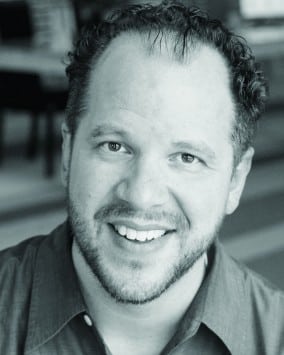
Q: What draws you to the work of Chekov?
A: I love his plays, in all their elegant, awkward brokenness. They speak to me — which I don’t always think is a particularly healthy thing. They are just such brilliantly constructed comic dramas about the difficulty and ridiculousness of getting through the struggles of everyday life. There is something about the way his people are so horribly stuck in their own issues and dilemmas that I find really moving. They are almost all trying to be their best selves and move forward in their lives, but most of them are failing at that most of the time. There is love and loss and longing and pain… but not a lot of hope. Because to have hope, you have to be able to imagine a realistic path forward towards what you want, and too many of his characters lack that essential skill. This harsh reality makes the plays extremely fertile playgrounds for engaging, frustrating, well-intentioned people striving endlessly to get that they want… and making very little progress progress. I find this kind of story sad, funny, and achingly human.
Q: What are you looking forward to with the Cygnet version of Life Sucks?
A: I so enjoyed the version Robby and his whole team did of my play Stupid F**king Bird some years ago, I’m eager to see how he —
and this unique, dynamic cast and design team — will reimagine the play for right now. The play is asking big, hard questions about how we live our lives in difficult times. So how the real world feels to the actors and the audience at this particularly moment really matters. The reality is, this play is very different from when I wrote it in 2015 because the world is so different. The issues that are most active in the minds and hearts of our audience will be very different. I will be eager to see where that leads the production, and how it will land with Cygnet audiences.
Q: How has the pandemic altered or reinforced your own opinion on whether Life Sucks or not? Has it influenced your rewrite of the play this time around?
A: Since I am answering these question while being sick with COVID, it certainly sucks a little right now! But no, not really, I guess I believe that life is complicated… and that we all live a lot of our lives standing at the corner of Suck and Not Suck, and have to choose which way to go every day. But sometimes those choices don’t feel like choices at all, and sometimes they can be incredibly fraught. So I think the pandemic has just put one more challenge onto an already endlessly complicated playing field.
It has been fun to do some rewrites from hearing these marvelous actors, but I would say about half the rewrites are because I hear things different in the world now because of social/political realities, and about half is simply because I have gotten older and had had new experiences, and I am hearing conversation with actors that are brining up fertile territory for further exploration. I never think my plays are ever really “done”. At some point I just have to stop, and it gets performed or published, but the world lives on in me, and it is always a pleasure to get to go back and tinker around some and spend some time with new version of old friends, which is how I think about the folks who occupy this play.
Q: Which character do you most identify with?
A: Oh, the age old question! I might as well be honest, I identify in significant ways with nearly all of them. This is a very personal play for me, and there is a lot of me in it, lurking behind certain aspects of nearly every character, so it’s honestly an impossible question to answer.
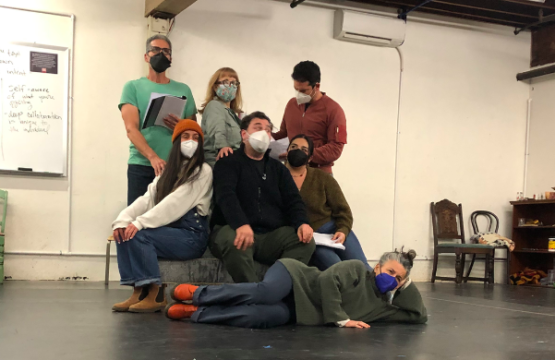
Director’s Notes: Life Sucks

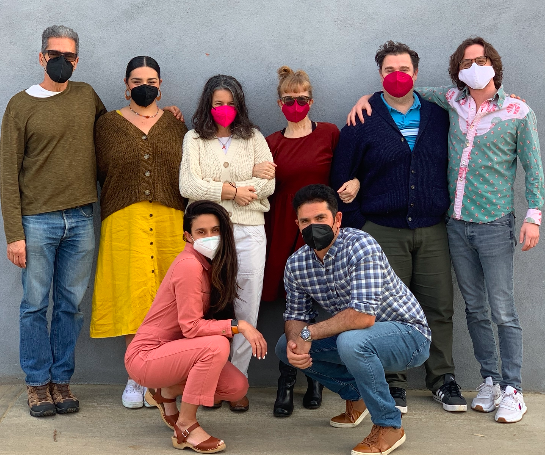
Looking ahead: 2021 and beyond

What is a mission statement? Does it hold weight in whatever limbo we are in? Drafting a mission statement is the first, and perhaps, most single most important task as one begins a theatre company. The mission statement will be a manifesto declaring the group’s ideals, its goals, its passions. It is a stone to which we refer in order to stay true to the principles established as a company. It is a flag of individuality and an oath to everyone who walks through our doors: this is who we are and this is what we stand for.
Back in 2002, when we crafted our mission statement, this is what we created:
Believing in the power of theatre to startle the soul, ignite debate and embrace the diversity of the community in which it serves, Cygnet Theatre Company is fearlessly committed to the dissection, examination and celebration of the human story through the medium of live theatre.
We’ve touched back on this many times over the years to help us stay aligned with what our theatre stands for. We have yet to feel it need to revise it, as it still is the strongest roadmap for us in our decision making. It has been a sturdy and encompassing touch stone.
But, ten months into this damned pandemic, it may feel as if almost none of that matters. Without being able to produce live productions, we’ve been challenged with finding other ways to create and meet our mission. In the numerous, numerous conversations we’ve held with each other since this pandemic started, many questions emerged:
- What place do the arts hold in the current world?
- How has our job changed?
- How will the arts need to adapt in the upcoming years?
- Have we “embrace(d) the diversity of the community in which (we) it serves”?
- How do we continue to follow our mission regarding serving community, when the community cannot gather?
- How do we fulfill our statement that we will be “fearlessly committed… to the medium of live theatre” when we aren’t yet able to create live theatre?
- Or most to the bone: who are we as artists?
These, and other serious questions, suggest long range perils for this industry and its role in our greater community must be strengthened in the coming year. But after ten months of reflection upon these and other questions, we believe that the arts are more essential now than ever before.
The arts serve to inform, entertain, challenge, introduce, and now, perhaps most importantly, to offer a refuge to reflect and share experience. That is what we do. The medium may have changed for the moment, but our mission remains the same.
When we are able to come back, it’s definitely going to be challenging. The theatre may make changes that are somewhat different from what we left back in March. It may never quite be exactly what it was, but newly reflect the challenges of a post-pandemic world. But the act of creating and sharing will remain the same as we are given the opportunity to rethink how we produce and make American theatre accessible to more people.
And we think that’s a good thing.
After ten months, our Mission Statement continues to hold strong:
- We are still dedicated to giving audiences something worthwhile.
- We are excited about the prospects of reaching new audiences.
- We are committed to providing our audiences, staff, casts, crew and designers a safe environment at all times where one can focus on the art on stage.
- We are dedicated to provide theatre experiences to our audiences that will enrich, inform, entertain, challenge, just as we’ve always done.
- And we are so respectful and grateful to our subscribers and donors who have not given up on the arts this past year but have stayed with us with the forward-looking goal of coming back stronger.
We ARE stronger and capable of more than we have imagined because we did not give up. Uncertainty still lays ahead for all of us, but we know that by working together, we can make a better future for our community through the arts.
The opening sentence of our mission statement is to believe in the power of theatre.
So that’s exactly what we’re going to do.
Thank YOU for sticking with us. Your faith in us inspires us and gives us reason to continue on. Thank you. Thank you, thank you.
Sean and the entire Cygnet Family
Cygnet Recommends: Reading List
Theatre is all about storytelling. So in the spirit of storytelling, we’ve put together our staff’s list of favorite books to read; whether it’s historical fiction, self-improvement, or of course…scripts! Enjoy!
 Sean Murray
Artistic Director
Empire of Liberty: A History of the Early Republic by Gordon S. Wood
“After seeing Hamilton, I realized that I really didn’t have a good sense of how this country formed itself after the Revolution. This is a thick and thorough history and totally absorbing and fascinating.”

Rob Lutfy
Associate Artistic Director
Where the Crawdads Sing by Delia Owens
“It’s set in the marshes of the North Carolina coast and Reese Witherspoon recommended it. I found it an enjoyable murder mystery thriller. The author’s unsurpassed knowledge of the natural world is more than matched by her beautiful descriptive poetic prose. Her insightful observations on our society, on relationships, love, prejudice, racism and sexism are intermingled with a fast paced and gripping story which takes us on an emotional journey that is set in the 30’s through to the 70’s.”
AND
 A Giacometti Portrait by James Lord
“This was the perfect book to read before sleep at night. Every chapter is a different sitting between one of my favorite painter’s and his subject. The artist painted, and the model recorded the sittings and took photographs of the work in its various stages. What emerged was an illumination of what it is to be an artist and what it was to be Giacometti. It’s a quick read, but an honest peek into what every artist struggles with when creating.”
Autumn Doermann
Marketing Director
 The Tea Girl of Hummingbird Lane by Lisa See
“I’m a huge fan of Lisa See’s work and this book was no exception. A beautifully written historical fiction novel, it’s the wonderful, bittersweet story of Li-Yan,
Laurel Withers
Development Associate
 The Weight of Ink by Rachel Kadish.
“An excellent book! I read a lot, and this is one I really enjoyed. It is historical fiction, and has great characters too. And one interesting thing about it is that a brief part of the story takes place during the Great Plague in London. It actually makes you appreciate the situation we’re in now—that was REALLY an epidemic! Makes this pale in comparison, but it does make you think.”
Rigo Vasquez
Office Manager
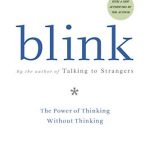 Blink by Malcolm Gladwell
“This is an awesome book. I love it because it talks in detail about what we call ‘intuition’ and how people can hone that skill to make good snap decisions with limited details.”
John Olchak
Marketing Insights and Data Analyst
 Lights All Night Long by Lydia Fitzpatrick
“A great character story of two Russian brothers, one accused of murder and one on an educational exchange in the United States trying to prove his brother is innocent. I met the author at a benefit luncheon and she told me she spent some time in Russia in the late 80s/early 90s so she wrote it from direct experience in the country.”
Jill Jones
Patron Services
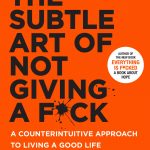 The Subtle Art of Not Giving a F*ck by Mark Manson
“It’s a wonderfully funny and powerful book that I read at least once a year to help keep things in perspective. I highly recommend for the textbook over-thinkers or anyone who might be looking for a light pressure self help book. :)”
Not into books? We’ve got some alternate suggestions here!
Bill Schmidt
Executive Director
“I read Flipboard which is a magazine style app on my phone that pulls stories from NYT, Washington Post, The Atlantic, etc. I read the MarketWatch website and financial magazine Barron’s. I have subscribed to the LA Times to keep posted on what’s happening in CA regarding Covid19. I also have coffee with Cuomo every morning and watch Newsom’s live press conference at noon.”
Craig Campbell
Production Manager
Scripts
“Mainly I have been reading plays. Some are more current, others are older ones, that I’ve never had an opportunity to read. Three Tall Women by Edward Albee, The Paris Letter by Jon Robin Baitz, Stop Kiss by Diana Son, and Hedda Gabler by Henrik Ibsen.”
Nil Noyan
Outreach and Events Manager
“I’m obsessed with TED Talks Daily Podcast on Spotify. News Break app keeps me informed with local as well as international news. During this quarantine Instagram Live interviews, mini concerts, chats, etc. are very entertaining to watch/listen!”
Cygneture Interview Series (NEW!)
An intimate and introspective chat featuring the actors, playwrights and designers you love! Here’s who you can expect to see soon!
Subscribe to our YouTube channel to see all the interviews as they are released!
COMING UP IN APRIL/MAY:
Actor – Cashae M. Overton
(The Last Wife)
Jessica John and Fran Gerke
(Backyard Renaissance)
Playwright – Danielle Mohlmann
(Dust)
Director – Delicia Turner Sonnenberg
Actors – Ro Boddie (Stupid F*cking Bird, Every Brilliant Thing)
and Tara Giordano
Playwright and actor – Herbert Siguenza
Cygnet Production Manager – Craig Campbell
Sound Designer – Melanie Chen Cole
Director – Jesca Prudencio
Broadway Actor – Matt Harrington
(Matilda)
Actors – Manny Fernandes (The Great Leap)
and Melissa Fernandes (A Christmas Carol)
Actor – Avi Roque
(HIR, Tiny Beautiful Things)
Actor – Bryan Banville (Spamalot)
and Choreographer – Katie Banville (Rock of Ages)
Barry Edelstein
(The Old Globe)
AND MORE TO COME…
COVID-19 Updates
Update as of 9/15/20:
It has been six months since we closed down our performance of La Cage Aux Folles in March. Six months of monitoring, planning (and re-planning) and waiting until we can see each other again.
An announcement for any in-person return to shows will only happen once we are able to safely make it happen BUT we are excited to announce that we have a full calendar of digital experiences to roll out to you for the remainder of this year and into 2021. And we’re building them to be flexible to the ever-changing future as it unfolds.
When we do announce our season return, it will include all new titles that are everything you expect from Cygnet shows – thought-provoking, entertaining, quality productions. Thank you for remaining patient!
If you’re a Season 18 Subscriber:
Because we know our return to shows will look a little different than anticipated, we’re converting your Season 18 subscription into a credit that can be used one of two ways:
- Hang onto it. Re-apply it to the new season subscription when we can finally gather together in person.
- Use it now! Can’t wait that long to connect with Cygnet? Use your credit toward any of our digital program in the meantime! Once we return in person, you can apply any remainder to your new subscription and we’ll adjust your amount-due.
So for now, you can enjoy our streaming performances for Pride and Prejudice and Fully Committed, join us for our newly launched Script Reading Club with Rob Lutfy, or stay tuned for our additional programming to be announcedMake sure you’re signed up for our regular e-blasts so you don’t miss anything.
And as always, please reach out to the box office with any questions or concerns. We can be reached at 619-337-1525 or boxoffice@cygnettheatre.com. The box office hours are currently Tuesday through Friday from 12:00 pm – 4:00 pm.
For Single ticket holders from Season 17, we have the following options:
- Keep the tickets which will be used for new tickets for La Cage aux Folles once we have performances confirmed.
- Consider using the value of the tickets as a tax deductible donation to the theatre. As a non-profit organization, Cygnet Theatre is a vibrant part of San Diego’s arts and culture community. However due to the nature of theatre as a gathering place, we are particularly vulnerable to the potential impact of this epidemic on the local economy.
- Turn the tickets into a credit that will stay on your account until we return to in-person theatre.
- While our normal ticket policy does not allow for refunds, we understand these circumstances require flexibility for everyone. If none of these options work for you, please let the box office know.
As a nonprofit, Cygnet Theatre relies on the financial support of our most dedicated patrons. Without the revenue from ticket sales, we need you now more than ever. A tax-deductible donation will help ensure we can continue to produce award-winning theatre in the future. Click here to donate.
Thank you for your help in keeping our community safe. We will get through this together!
Warm regards, The Cygnet Team